Handling High Concurrency in Node.js: The "Shock Absorber" Pattern
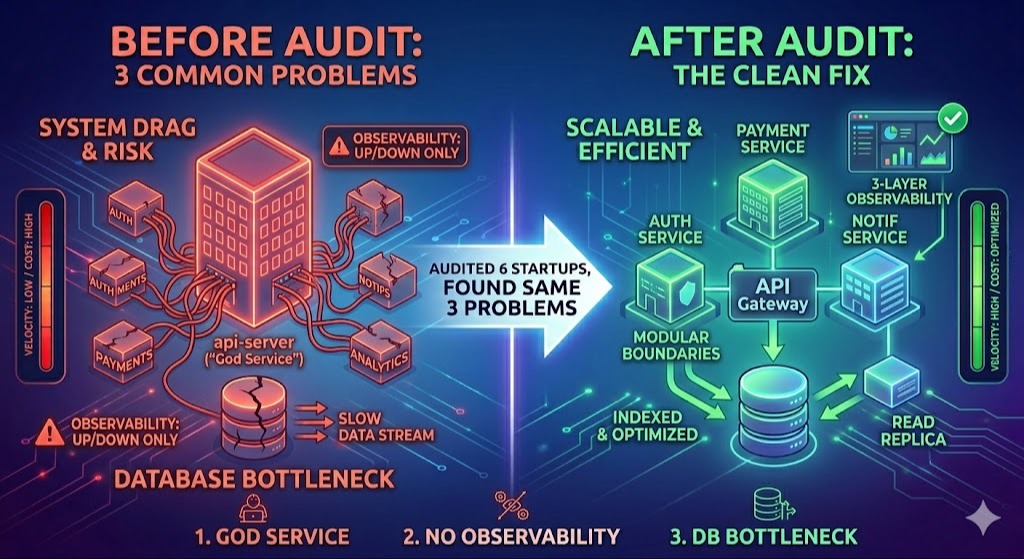
In high-demand environments — whether a flash sale, a ticket launch, or a fintech transaction window — standard REST API architectures often fail not because of code inefficiency, but because of database constraints.
When thousands of users attempt to write to the same table row simultaneously, database locking and connection exhaustion become inevitable bottlenecks. Scaling the server instances horizontally doesn't solve this; it only increases the pressure on the database.
To handle massive spikes in traffic without downtime, we need to decouple the user request from the database write operation. This requires moving away from synchronous transactions and implementing the "Shock Absorber" pattern.
Layer 1: Redis as the First Line of Defense
The first line of defense is moving inventory or state management out of the primary database and into memory using Redis. By utilizing Redis atomic operations, we can validate availability and reserve stock in milliseconds without ever touching the disk-based database.
This eliminates the race conditions that typically lead to overselling or deadlocks during peak loads.
Layer 2: Message Queue as the Shock Absorber
Once a request is validated in memory, we shouldn't force the user to wait for the final database commit. Instead, we push the transaction data into a message queue like RabbitMQ or Kafka. This allows the Node.js server to respond immediately to the client, keeping the application responsive.
Layer 3: Background Worker for Controlled Writes
A separate background worker service then consumes these messages at a controlled rate, updating the primary PostgreSQL or MongoDB database without overwhelming it.
Why This Works
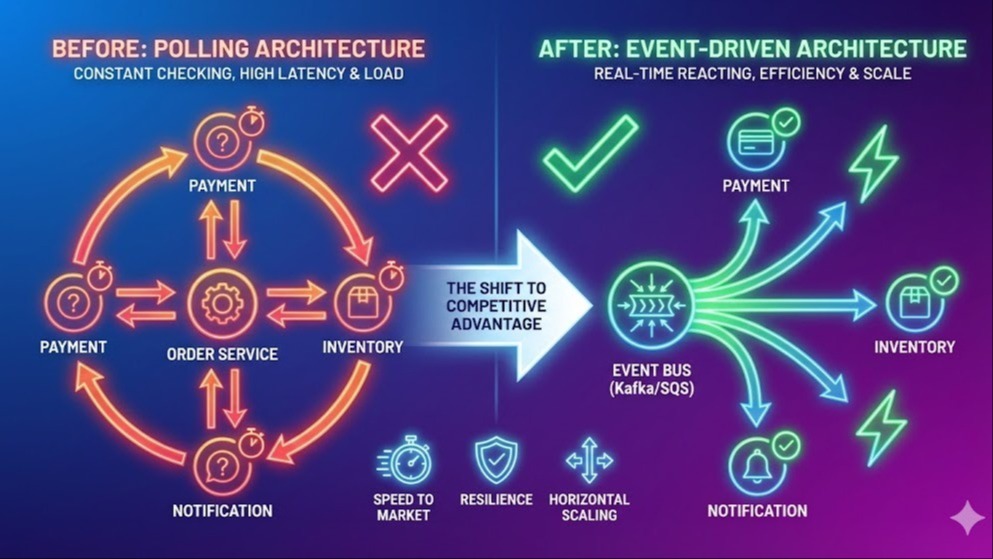
This architecture leverages the true strength of Node.js: its non-blocking I/O model. By treating heavy write operations as asynchronous events rather than synchronous tasks, we transform a fragile system into one that maintains data integrity and zero downtime, even under extreme load.
The shift from "request-response" to "event-driven" is often the difference between a successful launch and a system failure.
User Request
↓ [Redis] → Validate & Reserve (ms) ↓ [Message Queue] → Respond to user immediately ↓ [Background Worker] → Write to DB at controlled rate
Originally published on LinkedIn
Related reading
Backend slowing down as you grow?
Send me your stack and your traffic shape. I will tell you which of the four layers is actually your bottleneck — most teams optimise the wrong one and buy bigger servers instead.