Vibe Coding Gets You the Prototype. Engineering Gets You the Product.
We are currently living through the "Vibe Coding" era. It's a term recently popularized in tech circles (shoutout to Andrej Karpathy) to describe the new workflow: you tell an LLM what you want in plain English — you describe the vibe of the functionality — and the AI spits out working code.
It feels magical. It is blisteringly fast. It allows non-technical founders to build demos in an afternoon and junior developers to ship features at 10x speed.
But amidst the excitement, there is a lingering fear: Does this make the senior engineer obsolete?
The answer lies in the distinction between a prototype and a product.
"The 'vibe' coding gets you the prototype; the engineering gets you the product. Embracing these tools doesn't make experience obsolete — it makes architectural decision-making more critical than ever."
The Illusion of "Working" Code
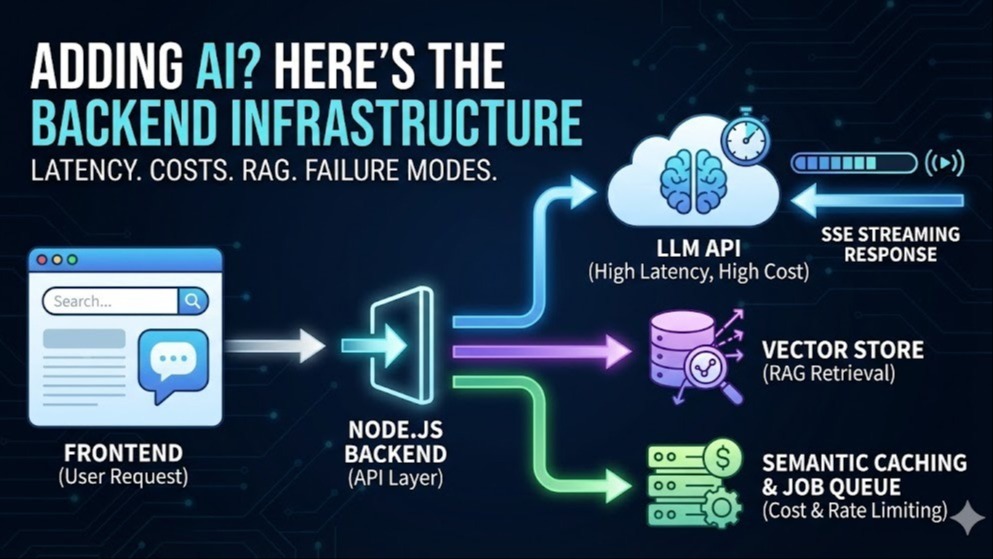
Vibe coding is excellent at solving local problems. It can write a React component, generate a Python script to parse a CSV, or spin up a basic SQL query. It reduces the "Time to Hello World" to near zero.
But software engineering is rarely about just getting code to run. It is about keeping code running three years from now when the user base has scaled by 100x and the original team has left.
"Vibe" coding gives you:
- Rapid UI visualization
- Immediate feedback loops
- The "Happy Path" (where everything goes right)
Engineering gives you:
- State Management: Handling race conditions when two users click that button at the exact same time
- Security: Ensuring the "working" code isn't susceptible to SQL injection or XSS because the LLM hallucinated a shortcut
- Scalability: Understanding that an O(n²) operation works fine for a demo of 10 items but will crash the server with 10,000 items
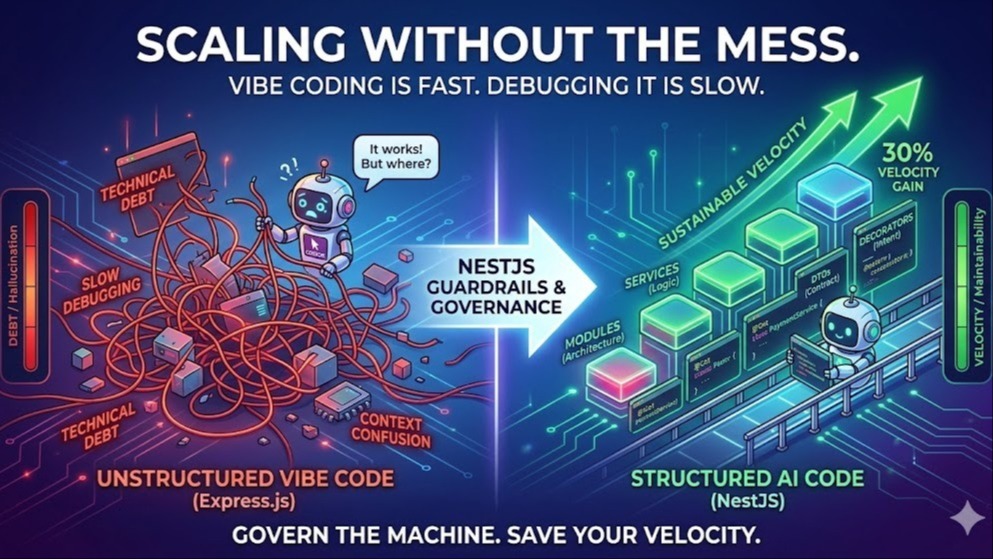
- Maintainability: Structuring the codebase so the next feature doesn't break the previous five
The Shift from Syntax to Strategy
In the pre-LLM world, a significant portion of a developer's cognitive load was spent on syntax — how do I write this loop? What is the specific argument for this library function?
Now, syntax is cheap. It is a commodity.
This doesn't devalue experience; it creates a massive premium on Architecture. When the barrier to generating code drops, the volume of code explodes. We are about to be drowning in code. Without an experienced engineer to orchestrate that code — to decide where logic lives and how services communicate — we will simply be building technical debt faster than ever before.
The New Senior Engineer
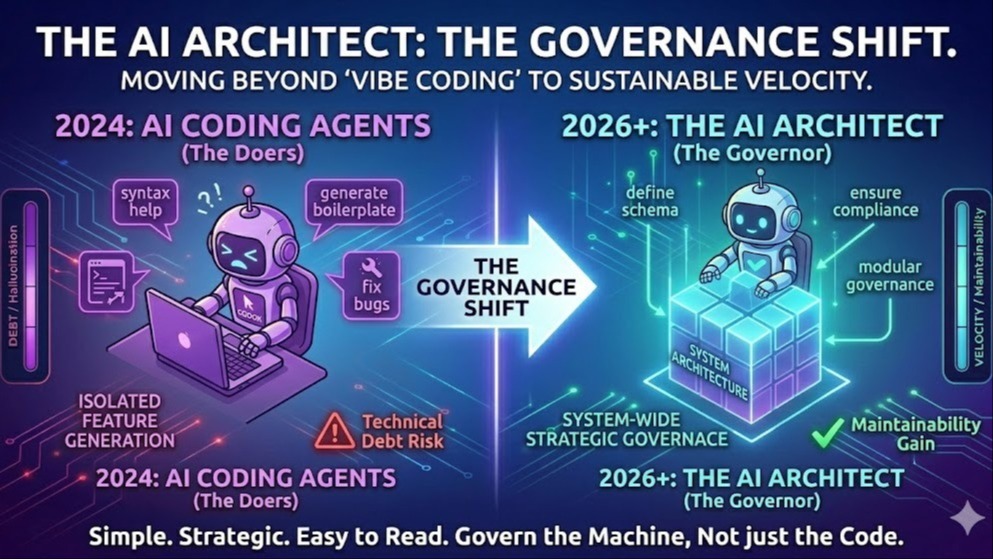
The engineer of the future isn't the fastest typist. They are the best editor and the best architect.
Experience is no longer about memorizing API documentation. Experience is:
- Pattern Recognition: Looking at an AI-generated solution and instantly spotting the edge case it missed
- System Design: Knowing that a microservices architecture is overkill for this specific problem, even if the AI suggests it
- Governance: Enforcing coding standards and security protocols on a codebase that is growing autonomously
The Verdict
Embrace the vibes. Use the tools. Let the AI write the boilerplate, the unit tests, and the initial drafts.
But remember: Code is easy. Systems are hard.
The tools will get you to the starting line faster than ever, but it is engineering rigor that gets you across the finish line.
Originally published on LinkedIn
Related reading
Built your MVP with AI? Get the architecture reviewed before it breaks.
I will review your prototype's backend and send you the three things that will break first at 10K users — what fails, why, and what it costs to fix now versus later. No call required, no pitch.