The 'Context Window' Paradox: Why Fragmented Microservices Are Sabotaging Your AI Strategy
Microservices Break Your App Into Pieces. They Also Break Your AI's Brain.
For the last ten years, the software industry has been obsessed with "decomposition." We took perfectly functional applications and smashed them into 20 different microservices, spread across 20 different repositories. We called it "scaling." In reality, for 90% of companies, it was just "fragmentation."
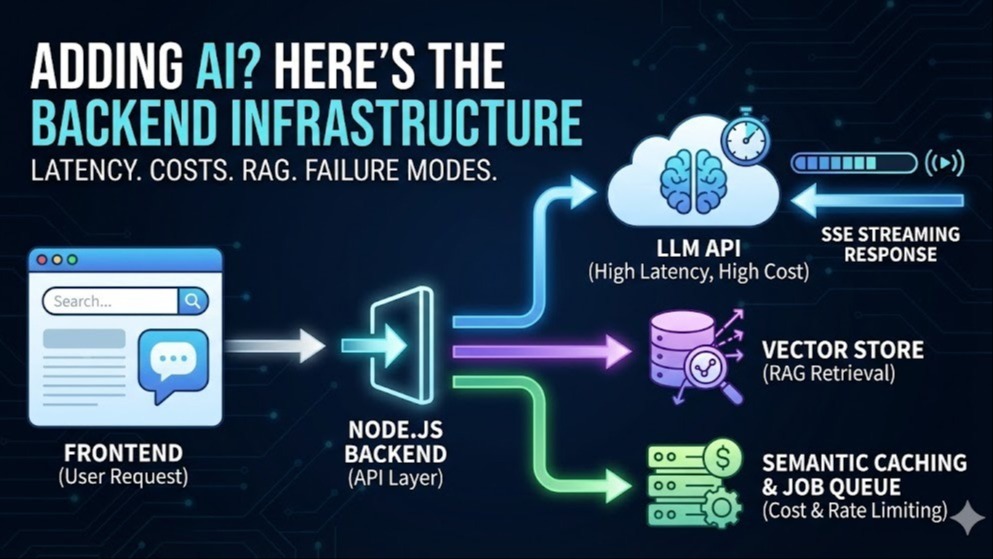
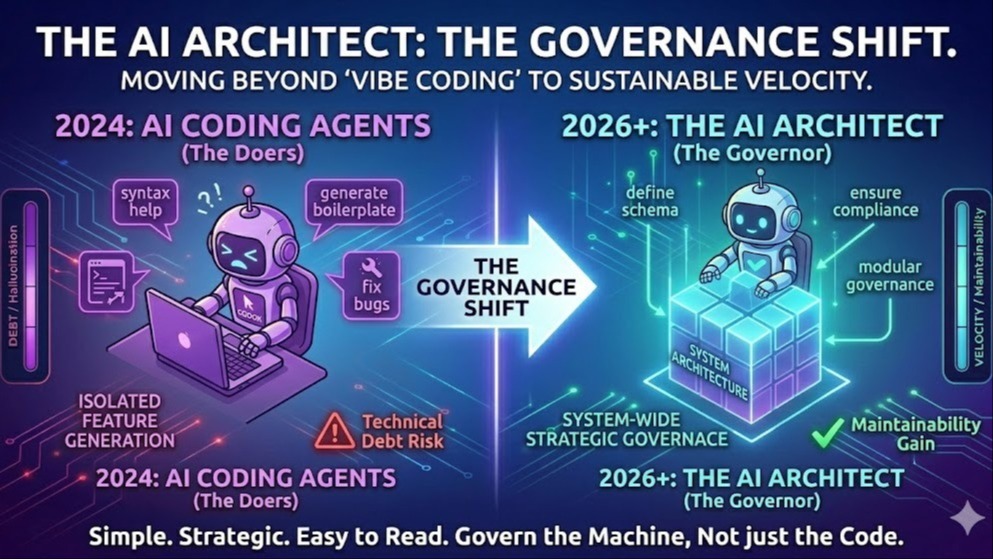
Now, we are trying to introduce AI agents — tools like GitHub Copilot Workspace, Cursor, and Devin — to help us build faster. And we are hitting a wall.
The AI struggles to reason about the system. It hallucinates dependencies. It fixes a bug in Service A but breaks the contract with Service B.
Why? Because of the Context Window.
The "Context Gap" in Microservices
Large Language Models (LLMs) work best when they can "see" the entire problem space at once. In a Microservices Architecture, the "problem space" is shattered:
- The User Service is in Repo A
- The Payment Service is in Repo B
- The Shared Type Definitions are in a library in Repo C
When you ask an AI to "add a subscription feature," it has to mentally jump between these silos. Most current tools cannot effectively index or reason across 15 disparate repositories simultaneously.
The "network latency" between your repositories creates a "cognitive latency" for the AI. The result? The AI writes code that assumes a database schema that doesn't exist, or calls an API endpoint that was deprecated three months ago.
The Return of the Modular Monolith
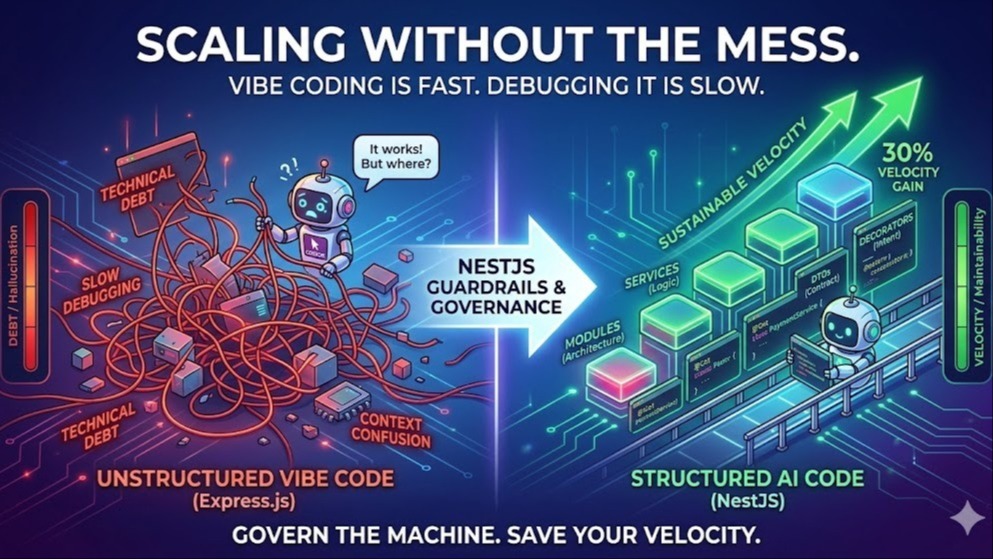
This is why I am advising my clients to pivot back to the Modular Monolith — not a "Spaghetti Monolith" where everything is a mess, but a single, unified codebase where logical boundaries are enforced by modules (like NestJS Modules), not by network cables.
1. Zero-Latency Context
In a Modular Monolith, the database schema, the backend logic, and the API interfaces live in one place. When you load this workspace into an AI editor:
- The AI can read the PostgreSQL schema file
- It can see the TypeScript interface for the User entity
- It can see the Frontend component calling that API
It has Full Context. It can perform "End-to-End Refactoring" in seconds — change a database column and immediately update the API DTO and Frontend Type definition, guaranteeing type safety across the entire stack. You cannot do that with microservices without complex tooling and coordination.
2. Atomic Deployments = Atomic AI Logic
AI agents struggle with "distributed complexity." If a feature requires deploying Service A, then updating Service B, then migrating Database C, the AI will often mess up the order of operations.
In a Modular Monolith, a feature is an Atomic Unit. The database migration, the backend logic, and the API change are all in one Pull Request. The AI can reason about the entire change as a single transactional unit. This dramatically reduces the "integration hell" that plagues distributed systems.
3. Killing the "Network Tax"
Microservices force you to write code just to talk to other code (HTTP requests, serialization, error handling, retries). This is "plumbing" code that adds no business value.
In a Modular Monolith, Service A calls Service B via a function call, not a network call:
- It is faster (zero network latency)
- It is safer (compile-time type checking)
- It is easier for AI to write
An AI writes a function call perfectly every time. It struggles to write a robust, retrying, circuit-breaking HTTP request to an internal service that might be down.
The Strategic Pivot
If you are Netflix or Uber, keep your microservices. You have the engineering capacity to manage them.
But if you are a startup or a mid-sized enterprise trying to leverage AI to move faster, fragmentation is your enemy.
The most productive architecture for 2026 is a Monorepo containing a Modular Monolith. It gives your human developers clarity, and it gives your AI agents the context they need to be truly autonomous.
Don't let "best practices" from 2015 slow you down in 2026.
Originally published on LinkedIn
Related reading
Not sure whether to split the monolith?
Tell me your user count, team size, and the part that hurts most. I will tell you whether your architecture is actually the problem — and I have talked plenty of founders out of a migration they did not need.